Easy, calm activities for seniors, including people living with dementia
Simple ideas for family visits and care home activity time, with tips on setting up a relaxed session and making things easier for tired eyes and less steady hands.
What makes a good activity for an older adult
The best activities for seniors are usually the simplest ones. They feel familiar, they can be done sitting down, and there is no wrong way to do them. For someone living with dementia or memory loss, that last part matters most: an activity should never feel like a test.
Think of the activity as a reason to sit together, not a job to finish. A half colored page or three words found in a puzzle is a good afternoon if it came with a chat and a cup of tea. Comfort, enjoyment and a bit of company are the whole point.
- Familiar: things they have done before, like folding, gardening or baking
- Short: 15 to 30 minutes is plenty
- Open ended: no score, no right answer, no rush
- Easy to adjust: simple to make easier, or to stop at any point
Easy activity ideas for seniors
These ideas work at home, on a family visit or during activity time in a nursing home or care home. Pick one or two and see what the person enjoys.
- Coloring: big, simple pictures of everyday things like a teapot, a garden or a cat in an armchair. Grown-up scenes, not childish ones.
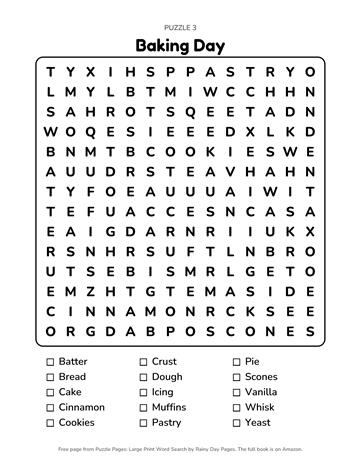
- Large print puzzles: word searches with big letters and short word lists, or an easy sudoku for someone who has always liked numbers.
- Looking at photos: family albums, old postcards or pictures of places they lived. Let them lead and do not quiz them on names.
- Music: songs from their teens and twenties, hymns, or a favourite singer. Humming along or tapping a hand counts.
- Kitchen tasks: stirring batter, shelling peas, buttering toast or decorating cookies.
- Garden tasks: watering pots, picking off dead flowers, planting a bulb, or sitting outside to watch the birds.
- Sorting and folding: buttons by color, socks into pairs, playing cards by suit, or a basket of towels and napkins.
- Reminiscing: first jobs, school days, dances, old cars, pets, or what Christmas was like growing up.
Conversation and reminiscing
Many older people enjoy talking about the past, and an everyday object or picture is often the easiest way in. A rotary telephone, a clothesline or an old pickup truck can start a story without anyone having to ask a hard question.
Ask open, gentle questions with no wrong answer. "Did you ever have a garden?" works better than "What year did you move to that house?" If the answer drifts or repeats, go along with it. The talk matters more than the facts.
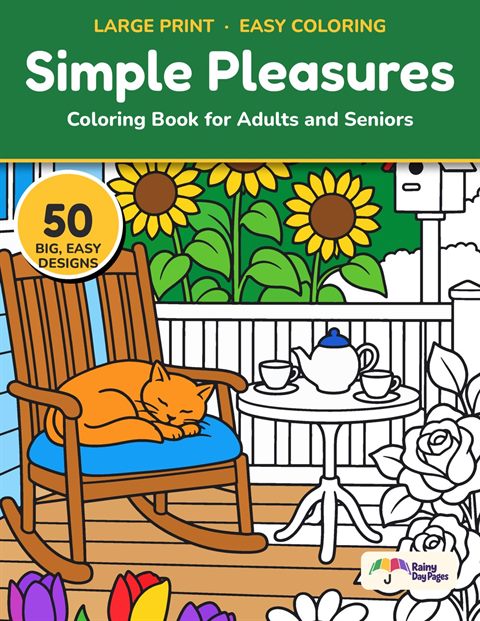
This is why there is a conversation question under every picture in Simple Pleasures. A visitor who is not sure what to say has something ready, and the person coloring can answer or simply keep coloring.
How to set up a calm session
A little preparation helps a lot. Most of it is about removing small frustrations before they start.
- Good light: sit near a window or use a bright lamp, and avoid glare on shiny paper.
- A clear table: just the page and a few markers or pencils, not a whole box.
- Thick markers or chunky colored pencils: easier to hold, and the colors show up well.
- One page at a time: fold the book back so only one picture is in view.
- Short sessions: 15 to 30 minutes, and stop while it is still pleasant.
- No pressure: no corrections, no "stay inside the lines", and any color is the right color.
- Talk about the picture: what it reminds them of, who had a porch like that, which flowers they used to grow.
- Same time, same place: a regular spot after lunch or with afternoon tea can become a nice part of the week.
Tips for low vision and less steady hands
If eyesight or hands are not what they used to be, choose materials that do some of the work. Large print and thick, bold outlines are much easier to follow than fine detail, and full size 8.5 x 11 inch pages give plenty of room.
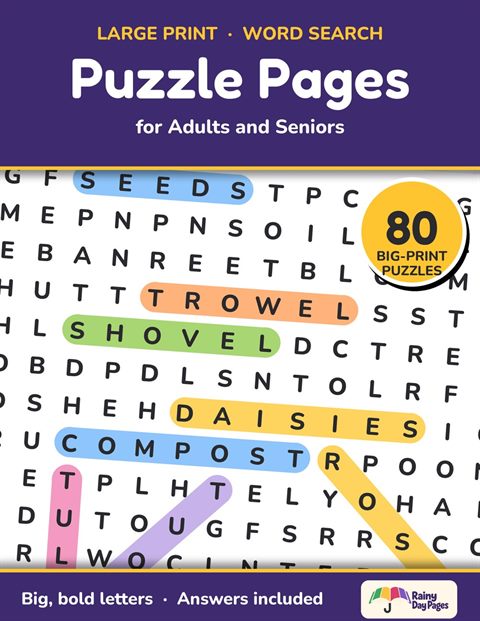
For puzzles, look for word searches where the words read forwards only and each word has a box to tick, so it is easy to keep your place. An answer key at the back saves frustration for whoever is helping.
- Choose high contrast: dark markers on white paper are easiest to see.
- Rest the page on a firm clipboard or a slanted board so it does not slide.
- A non-slip mat or a strip of tape keeps the page still.
- Foam grips or fat triangular pencils help with a weaker grip.
- Felt tip markers need less pressure than colored pencils.
- Pick books with each picture on its own page and a blank back, so markers never bleed onto another picture.
- Keep clean reading glasses and a magnifier within reach.
Activity time in a care home or nursing home
In a group, keep things flexible. Some residents will want to color, some will want to watch, and some will just want to talk. All of that is fine.
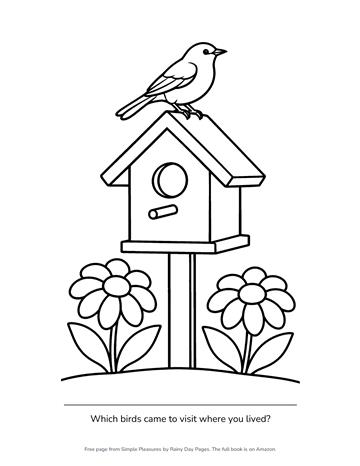
Giving everyone the same picture, such as a free printable page, gives the group something to share, because every teapot or birdhouse will turn out different. A theme ties the hour together: gardens in spring, the seaside in summer, or Christmas cards, carols and holiday pictures in December.
For residents who would rather not hold a pen, read the puzzle words aloud and let them spot the letters, or hand them a sorting or folding task so they are still part of the group.
- Keep groups small, four to six people if you can.
- Play quiet music from their era in the background.
- Have spare markers so nobody has to wait.
- Say what you like about each page, never what is wrong with it.
Books that fit
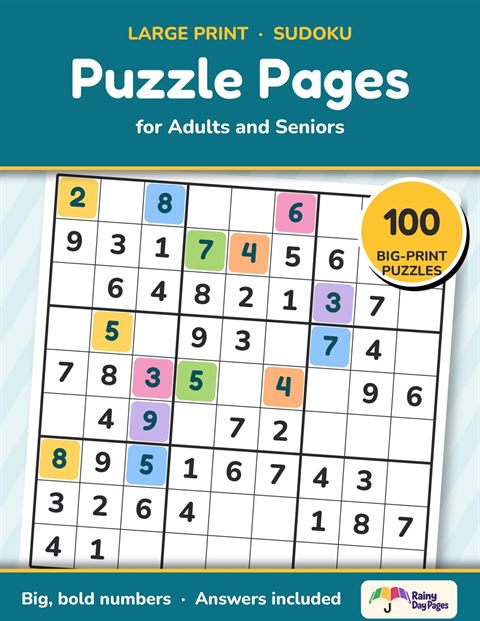
These books have big, bold pages, blank backs and large print, made for older eyes and hands. Both Simple Pleasures books also have a gentle conversation question under every picture.

Questions people ask
What activities are good for seniors with dementia?
Simple, familiar ones with no wrong answer: coloring big pictures, looking at photos, listening to old songs, folding laundry, sorting buttons or helping in the kitchen. Keep sessions short and follow their lead.
Are coloring books childish for older adults?
Not if the pictures are grown-up. Look for everyday adult scenes like gardens, kitchens, porches and old cars, with thick lines and big spaces, rather than cartoon characters.
Is word search or sudoku better for seniors?
It depends on the person. Word searches suit people who enjoy words and like ticking things off. Sudoku suits people who have always liked numbers. For someone with memory loss, coloring or an easy word search is usually more relaxing.
How long should an activity session last?
15 to 30 minutes is usually enough. Stop while it is still enjoyable and try again another day rather than pushing on.