Letter tracing for preschoolers: an easy way to start at home
You do not need a teaching degree or a lot of time to help a 3 to 5 year old get ready to write. A few minutes of play, some big dotted letters and plenty of encouragement go a long way.
Start with lines, curves and play
Before letters, there are lines. Every letter is built from a few simple shapes: straight lines down, lines across, slants, circles and curves. When a child can draw these comfortably, letters come much more easily.
Pre-writing activities do not have to look like schoolwork. Most of them feel like play, and that is the point. They build strength and control in little hands while your child is having fun.
- Roll, squeeze and pinch play dough into snakes, balls and pancakes
- Draw lines and circles with a finger in a tray of sand, salt or rice
- Paint big strokes on paper or on a fence with water and a brush
- Draw roads, rain, waves and bouncing balls with chunky crayons
- Pick up small toys with fingers or child-safe tongs
Pencil grip basics
Young children often start by holding a crayon in a fist. That is normal, and the grip usually changes as their hands grow and they get more practice. You can gently show a more relaxed hold, with the pencil resting between the thumb and the first two fingers, but there is no need to force it.
Short, thick crayons and pencils are often easier for small fingers to hold. Sitting at a table at a comfortable height, with feet supported, also helps. If you ever have concerns about how your child holds a pencil, their teacher or doctor is the right person to ask.
Trace big dotted letters with a model to follow
Once your child enjoys drawing lines and curves, tracing letters is a natural next step. Big dotted letters on clear guide lines show exactly where the pencil should go. A solid model letter at the start of each row gives your child a picture of what they are aiming for.
Sit beside your child and trace the first letter yourself while you say what you are doing: down, back up, and around. Then let them have a turn. Many children like to start with uppercase letters, which use more straight lines, and move on to lowercase when they feel ready.
Tracing works best when the letters are large and there is plenty of space. Small, crowded worksheets can feel hard and frustrating at this age.
Little and often: 5 to 10 minutes is plenty
Short sessions beat long ones. Five to ten minutes a few times a week is enough for most preschoolers, and it is much better to stop while your child is still enjoying it than to push on until they are tired.
Pick a calm moment, like after breakfast or before quiet time, and keep it relaxed. If your child is not in the mood, put the pages away and try another day. Letters will still be there tomorrow.
- Keep pages and crayons in one place so it is easy to start
- Do one letter or one row, not a whole book
- End on a happy note, even if it is just one good try
Letter of the week and their own name
A letter of the week gives practice a simple rhythm. Choose one letter and look for it everywhere: on cereal boxes, street signs and book covers. Find toys that start with that sound, make the letter out of play dough, and trace it on paper a couple of times during the week.
Your child's name is often the most exciting word of all. Write it in big letters for them to trace, and point out the first letter whenever you see it. Many children are proud to write their name on a drawing or a birthday card long before they know the whole alphabet.
Make it playful and praise the effort
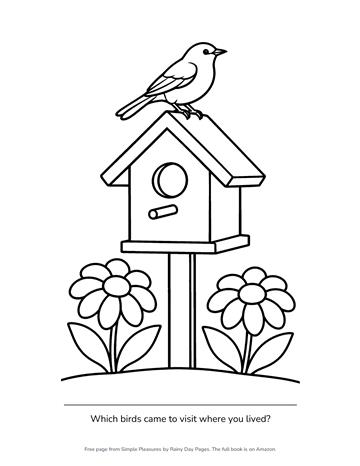
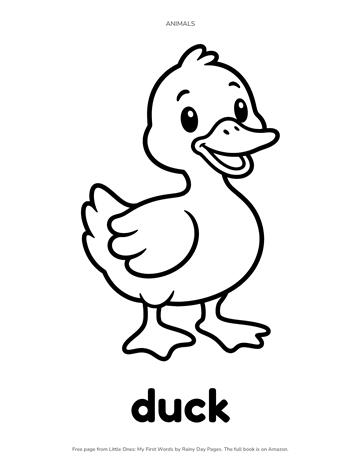
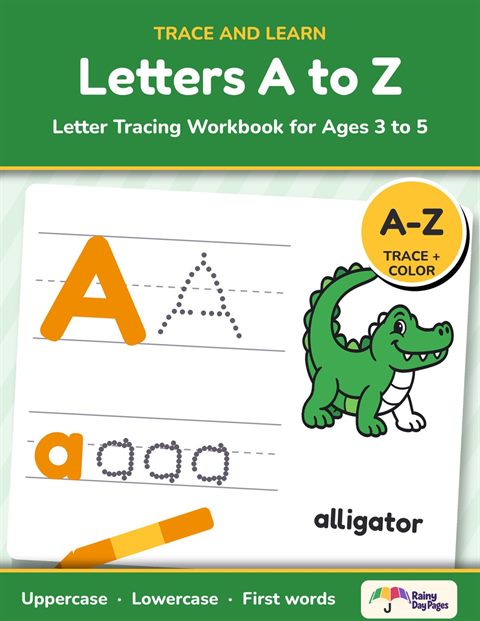
Pair tracing with something your child already loves. Coloring a picture after tracing the letter, like an alligator for A or a butterfly for B, turns practice into a small reward. That is how Trace and Learn: Letters A to Z is set up, with a picture page and a tracing page for every letter.
Wobbly letters are completely normal. Praise the trying rather than the result: you kept going, you went all the way down, you did the curve. A child who feels good about writing will want to come back to it.
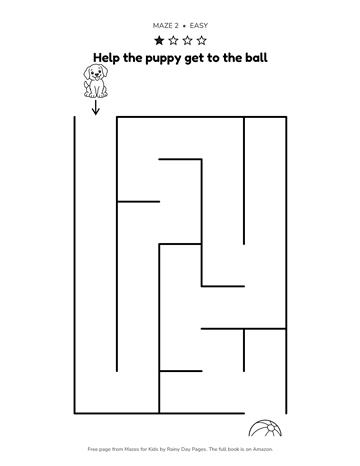
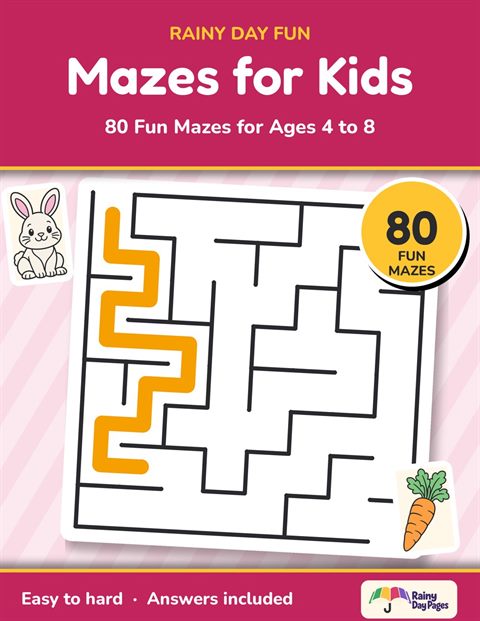
For children aged 4 and up who enjoy a challenge, mazes are another fun way to practise pencil control. Following a path from start to finish without crossing the lines uses the same careful hand movements as writing.
Books that fit
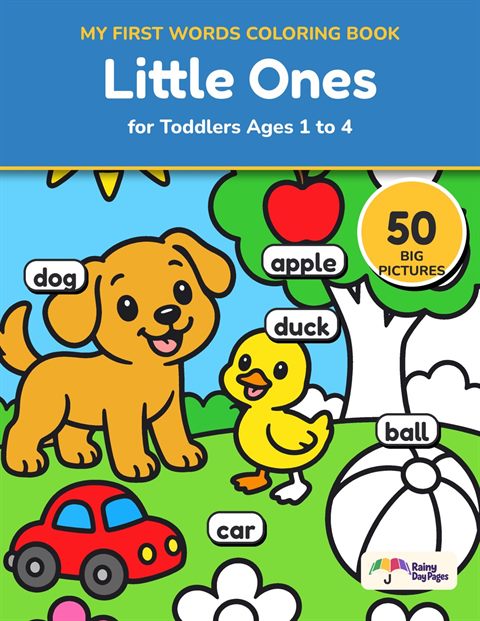
These books give little hands big, clear pages to practise on, from first words to letter tracing and mazes for pencil control.
Questions people ask
What age should a child start tracing letters?
Many children enjoy tracing between about 3 and 5. Every child is different, so start with lines, curves and play, and move to letters when they show interest.
Should my preschooler learn uppercase or lowercase letters first?
Many families start with uppercase because the letters use more straight lines. Lowercase can follow when your child is comfortable. Their name usually mixes both, and that is fine.
How long should letter practice last?
About 5 to 10 minutes is plenty for a preschooler. Stop while it is still fun and try again another day.
What are good pre-writing activities?
Play dough, drawing in sand or salt, painting big strokes, coloring, mazes and picking up small objects all help little hands get ready to write.