Large print puzzle books for seniors and anyone with tired eyes
What large print really means, how word search and sudoku compare, and small, practical ways to make puzzle time comfortable, whether you are buying for yourself or for someone you love.
What large print really means in a puzzle book
Large print on the cover does not always mean large print inside. Some books simply print a normal puzzle a little bigger and squeeze two onto a page. For older eyes, size is only part of it. Spacing, contrast and room to write matter just as much.
A good large print puzzle book gives every puzzle a whole page and leaves white space around it, so the eye can rest and the pencil has somewhere to go. If you can, look at the sample pages before you buy and picture reading them at arm's length, without squinting.
- Letter and number size: bold, clear characters you can read without leaning in.
- Spacing: gaps between letters in a word search grid, and roomy squares in a sudoku.
- One puzzle per page: a full 8.5 x 11 inch page, not two small puzzles crowded together.
- Paper and print: dark print on plain white paper, with no busy backgrounds behind the grid.
- Answer keys: a full set of answers at the back, so nobody stays stuck.
- Lies open easily: a paperback can be pressed gently along the spine or held open on a clipboard.
Word search, sudoku or something else?
The best puzzle for an older adult is the one they already enjoy. There is no need to push someone who loves words toward numbers, or the other way round. Here is a quick guide to the most common types.
If you are not sure, start with a word search. It is the gentlest way in, and nobody needs to learn any rules.
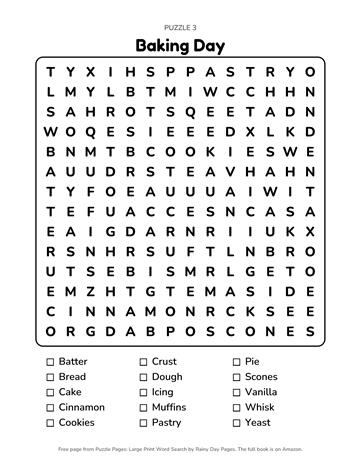
- Word search: for people who like words and the small pleasure of ticking things off. Look for themed lists and words that read forwards only, never backwards.
- Sudoku: for people who have always liked numbers, patterns or a bit of logic. No maths is involved, only the digits 1 to 9.
- Crosswords: for keen readers and trivia fans. Large print crosswords exist, but the clues can make them slower going on tired days.
- Jigsaw puzzles: good for sharing at a table. Choose fewer, bigger pieces and a clear, bright picture.
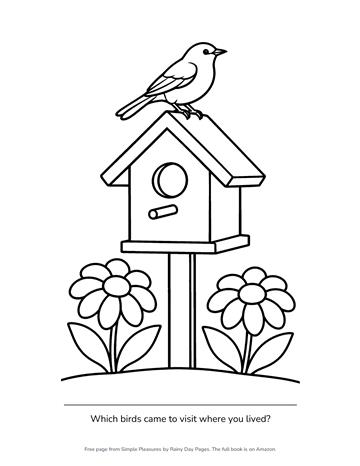
- Coloring: not a puzzle, but a calm choice for days when a puzzle feels like too much.
How to get started with sudoku in simple steps
Sudoku looks harder than it is. The grid has 9 rows, 9 columns and 9 boxes of 3 x 3 squares. The only rule: each row, each column and each box must hold the numbers 1 to 9 once each. That is all.
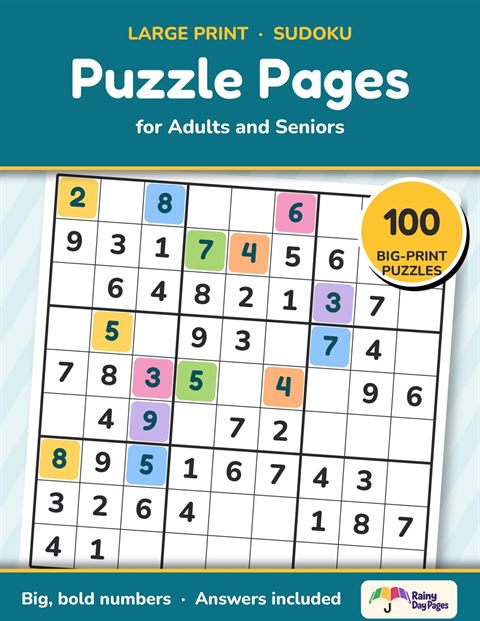
Start with the easiest level and take your time. In our Large Print Sudoku, stars on every page show the level, from easy to hard, and every puzzle can be solved step by step, with no guessing.
- Use a pencil with a good eraser, never a pen.
- Pick one number, say 1, and look for the boxes that do not have it yet.
- Check the rows and columns that run through that box. Where can the 1 not go? Often only one square is left.
- Write it in, then move on to the next number.
- Look for rows, columns or boxes that are nearly full. If only one square is empty, the missing number is easy to find.
- If you are unsure, write small pencil notes in the corner of a square.
- Stuck? Peek at the answer key, then carry on. Nobody is keeping score.
Tips for comfort and tired eyes
A few small changes make puzzle time much more pleasant. Most of them cost little or nothing.
- Good light: sit by a window in the day, or use a bright lamp over your shoulder at night.
- A magnifier: a hands-free or sheet magnifier helps with the last few letters of a long word.
- Pencil grips: foam grips or chunky pencils are easier to hold for a while.
- A clipboard: it keeps the page flat and steady, on a table or on your lap.
- A sharp pencil and soft eraser: clear marks, and easy to change your mind.
- Short sessions: one or two puzzles, then a break. Stop while it is still fun.
- A regular time: a puzzle with the morning coffee or after lunch can become a nice part of the day.
Doing puzzles together, on visits or in groups
Puzzles are a lovely thing to share. On a family visit, a word search gives you something to do side by side, and the theme often starts a conversation: classic cars, baking day or the dance hall can bring back a story or two.
In a care home or community group, read the words aloud and let everyone hunt for them on their own copy, or put one sudoku on a large sheet and solve it together. Some people will want to find the words, some will want to watch and chat, and that is fine.
- Let the other person hold the pencil and set the pace.
- Help with hints, not answers: try the top row, or look for a word starting with B.
- Give everyone the same puzzle so the group has something to share.
- Celebrate finished puzzles, but never point out mistakes.
Choosing a puzzle book as a gift
A large print puzzle book is a simple, thoughtful gift for a parent, a grandparent, a neighbour or anyone recovering at home. Think about what they already like doing, and how their eyes and hands are these days.
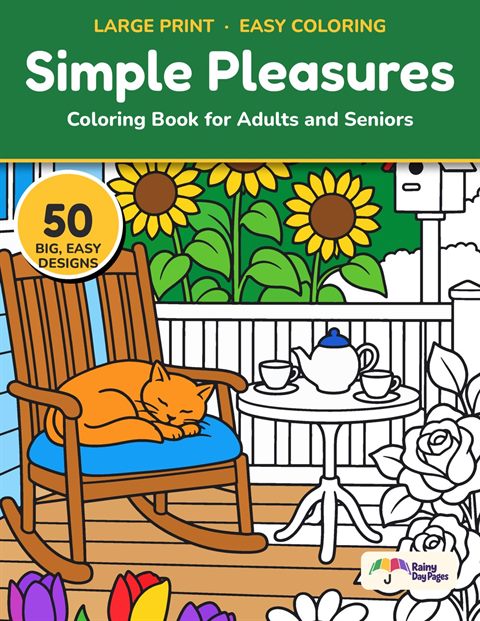
For a word lover, a large print word search with friendly themes is an easy choice. For a numbers person, a sudoku book that starts easy and builds up gives them room to grow. For someone who would rather relax than solve, a large print coloring book such as Simple Pleasures may suit them better.
- Check the sample pages for print size and spacing.
- Choose one puzzle per page and an answer key at the back.
- Add a pack of pencils, a good eraser or a clipboard.
- Try a free printable page first to see if they enjoy it.
Books that fit
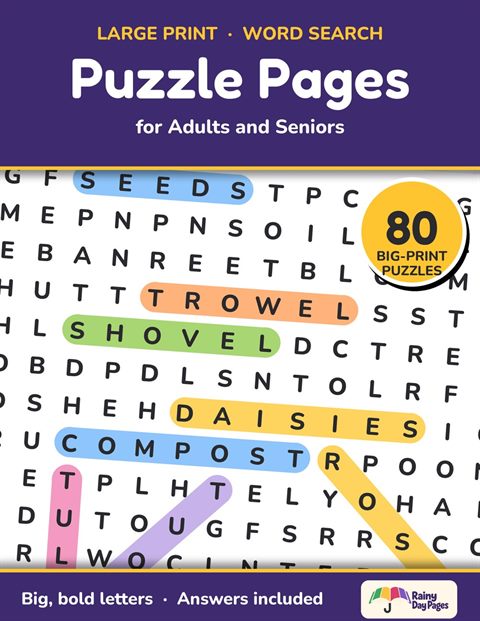
These books are made for older eyes: one puzzle or picture per full page, big bold print and plenty of room. The puzzle books have a full answer key at the back.
Questions people ask
What are the best puzzles for elderly people?
The ones they already enjoy. Word searches suit people who like words, sudoku suits people who like numbers, and large piece jigsaws are nice to share. Choose large print, one puzzle per page and an answer key.
What size print is large print?
There is no single rule. What matters is that the letters or numbers are bold and clear enough to read without squinting, with plenty of space around them. Look at sample pages before you buy.
Is sudoku hard for beginners?
Not if you start with easy puzzles. The only rule is that each row, column and 3 x 3 box holds 1 to 9 once each. Use a pencil, go one number at a time, and check the answers when stuck.
Is a puzzle book a good gift for a senior?
Yes, if it matches what they like. Pick word search for a word lover and sudoku for a numbers fan, and add pencils and an eraser. Large print and an answer key make it easier to enjoy.