When can toddlers start coloring? A gentle guide to a first coloring book
Most toddlers are happy to try a crayon somewhere between their first and second birthday. Here is what to expect, what makes a good first coloring book, and how to keep it short, safe and fun.
When can toddlers start coloring?
There is no exact date to wait for. Many children show interest in crayons somewhere around 12 to 18 months, often after watching an older sibling or a grown-up draw. Some are keen right away, and some would rather throw the crayon or chew on it for a few more months. Both are normal.
A good sign your toddler is ready: they can sit with you for a few minutes, hold something in their fist, and they are curious when you make marks on paper. If they lose interest quickly, put the crayons away and try again another week. Every child comes to it in their own time.
Scribbling comes first, and that is the point
A one year old does not color inside the lines, and they do not need to. Early coloring is mostly big back and forth scribbles, dots and happy smudges across the whole page. That is exactly how it should look.
Over time, scribbles often turn into circles and lines, and later into marks that land closer to the picture. There is no need to correct or guide their hand. Praise the colors they picked and how hard they worked, not how neat it is. A page that is mostly purple scribble with one corner of a duck showing is a perfectly good page.
- First: grabbing the crayon in a fist and making marks anywhere
- Then: bigger sweeps, circles and lines, with more control
- Later, often around preschool age: coloring near and inside the shapes
- There is no rush to move from one stage to the next
What to look for in a first coloring book
Many coloring books are made for older children, with busy scenes and small spaces. For a toddler, simpler is better. Look for a book where every page is easy to understand at a glance.
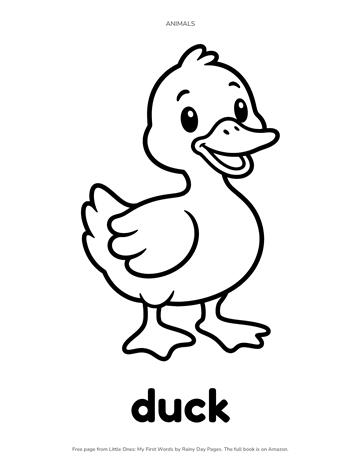
- Big, simple pictures of everyday things your child already knows
- Thick outlines that are easy to see and hard to lose
- One picture per page, so there is only one thing to look at
- Blank backs, so marker bleed-through lands on a blank page and not on the next picture
- A word printed under each picture, so you can name things together
- A large page, like 8.5 x 11 inches, with plenty of room for wild scribbles
The best crayons for toddlers
For the very first tries, chunky crayons are the easiest choice. They are thick enough for a small fist to hold, they do not snap as easily, and they leave a nice bold mark with little pressure. Egg shaped and triangular crayons are also made for this age and roll away less.
Washable markers are fun too, but they can soak through thin paper, which is one more reason to choose a book with blank backs. Save fine tip markers and colored pencils for later, when small hands have more control.
- Choose crayons labelled non-toxic and check the age on the package
- Pick thick or chunky shapes over thin ones
- Offer two or three colors at a time instead of the whole box
- Always stay close by, since toddlers still like to put things in their mouths
Make coloring time word time
Coloring with a toddler is a lovely chance to talk. Point to the picture and say the word: cat. Point to the word underneath and say it again. Ask simple questions like where is the cat's tail, or what does a cat say. You do the talking, and they join in when they are ready.
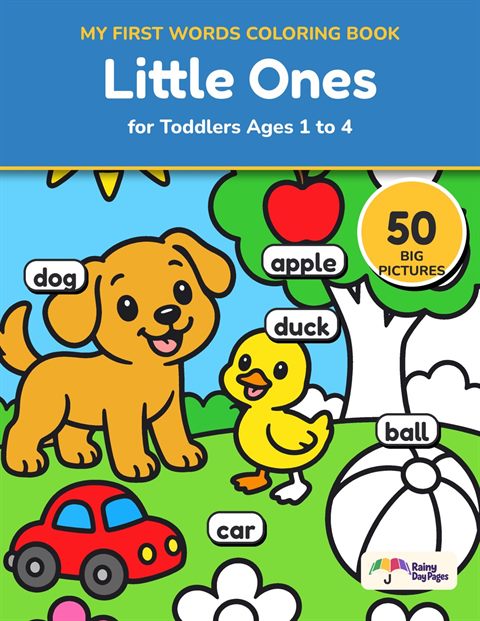
Talk about the colors as you go, too: you picked blue, a blue cat. Afterwards, look back through the pages together and name the pictures again. This is the idea behind Little Ones: My First Words, where every picture has its word printed underneath, so it is easy to point and say it together.
Keep sessions short and fun
A toddler's coloring session might last two minutes, and that is fine. Stop while it is still fun, before anyone gets frustrated. A short, happy time at the table every day or two tends to go better than a long one.
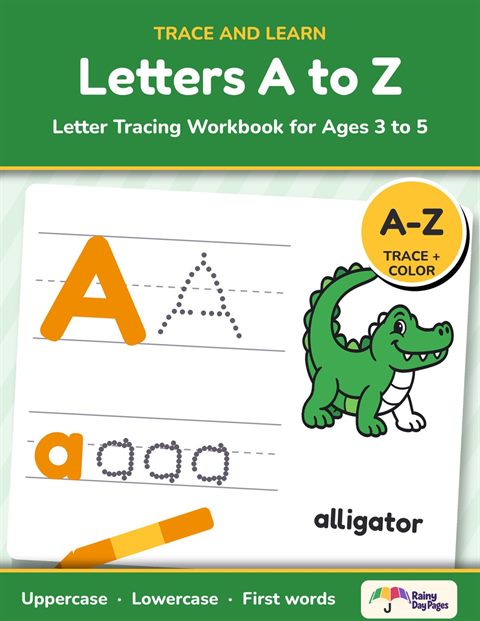
Let your child choose the page and the colors, even if the sun ends up green. Hang a finished page on the fridge or tear it out to send to a grandparent. When they are a little older, around 3 to 5, you can add simple tracing pages to the mix. For now, the goal is simply to enjoy it together.
- Pick a calm time, like after a nap or a snack
- Tape the page to the table so it does not slide
- Color your own page next to them, they love to copy
- Celebrate every page, finished or not
Books that fit
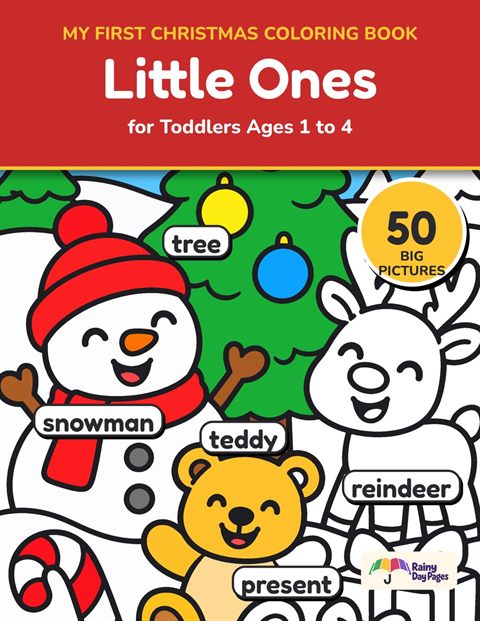
These books were made for exactly this stage: one big, simple picture per page with thick lines, blank backs, and a word under every picture in Little Ones. Trace and Learn is there for later, when your child is 3 to 5.
Questions people ask
Can a 1 year old color?
Yes, many 1 year olds enjoy scribbling with chunky crayons while you sit with them. Expect marks all over the page, not coloring inside the lines, and keep it short.
What crayons are safe for toddlers?
Look for thick or chunky crayons labelled non-toxic, with an age on the package that matches your child. Stay close by, since toddlers often try to taste them.
When do toddlers color inside the lines?
It varies a lot. Many children start coloring near and inside shapes in the preschool years. Before that, scribbling is normal and there is no need to correct it.
What should a first coloring book have?
Big, simple pictures of familiar things, thick outlines, one picture per page and blank backs. A word under each picture makes it easy to name things together.